12 Apr
2007
12 Apr
'07
8:52 a.m.
For those of you who get the Minneapolis Star Tribune there is a great
article on the front of the taste section about Natalie and her new book
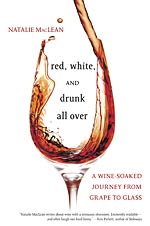
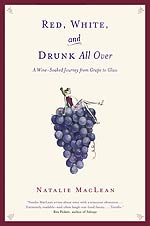
"red, White, and Drunk All Over." One of my best reads....it's
entertaining and informative.
also check our her website to sign up for her bi-weekly newsletter
www.nataliemaclean.com
Joyce
----- Forwarded by Joyce Hegstrom/FS/CarlsonSchool on 04/12/2007 08:49 AM
-----
Natalie MacLean
<natalie@nataliem
aclean.com> To
jhegstrom(a)csom.umn.edu
04/10/2007 05:22 cc
AM
Subject
Nat Decants Newsletter: Wine
Please respond to Cellars
"Natalie MacLean"
<Natalie_MacLean_
ztszsg(a)cmpgnr.com
(Embedded image moved to file: pic24575.jpg)
(Embedded image moved to file: pic23251.jpg)
(Embedded image moved to file: pic27467.jpg)
(Embedded image moved to file: pic19094.jpg)
(Embedded (Embedded image
April 10, 2007 image moved moved to file:
to file: pic51881.gif)
Dear Joyce, pic60152.gif)
Organic wines are among the fastest growing (Embedded image
segments in the liquor store, but they're also moved to file:
widely misunderstood, from how they're made to pic31691.jpg)
their health benefits. I hope this piece helps (Embedded image
to shed some light on these questions. moved to file:
pic08181.jpg)
In future issues of the newsletter, look for (Embedded image
features on hot drinks, the impact of global moved to file:
warming on wine, and the battle between beer and pic10618.jpg)
wine (which is better?). The next newsletter (Embedded image
will go out April 27. You can find more articles moved to file:
and wine picks www.nataliemaclean.com. pic19977.jpg)
(Embedded image
Regarding the changes I've made to the wine moved to file:
picks recently: You can still look at the pic51887.jpg)
complete list of all the wines I choose each (Embedded image
week without having to use the new search moved to file:
engine. As usual, I include just four of the pic03011.jpg)
wines in the newsletter itself so that it (Embedded image
doesn't get too long. The rest of the moved to file:
newly-recommended wines for the week, usually pic60816.jpg)
15-25 bottles, are posted in my Wine Picks (Embedded image
section. moved to file:
pic08158.jpg)
Just click through to the Wine Picks section on (Embedded image
my site, and then click on the latest date: moved to file:
voilá, they're all there posted on that page and pic64219.jpg)
you can print them out as a shopping list. The (Embedded image
only change I made was to make the search engine moved to file:
more sophisticated for when you do want to pic10705.jpg)
search for wines I've recommended previously. (Embedded image
moved to file:
I've added a new feature to the web site and pic27123.jpg)
newsletter this week: delicious recipes! For (Embedded image
details on these, see below just under this moved to file:
note. pic58660.jpg)
(Embedded image
Please forward this issue to other wine lovers moved to file:
whom you think would enjoy it. You can also pic19260.jpg)
suggest friends and I'll send them an intro note (Embedded image
on your behalf. moved to file:
pic12843.jpg)
You can change your e-mail address quickly and (Embedded image
easily online here or add a second address for moved to file:
yourself if you'd like to receive the newsletter pic21328.jpg)
both at home and at work. (Embedded image
moved to file:
I now get tens of thousands of visitors to my pic54677.jpg)
web site weekly. Just let me know if you'd like (Embedded image
to exchange food- and wine-related web site moved to file:
links. pic54643.jpg)
Have a great weekend! (Embedded image
moved to file:
Cheers, pic23438.jpg)
(Embedded image
(Embedded image moved to file: pic53688.gif) moved to file:
pic24259.jpg)
Book
American Edition
Wine & Recipe of the Week "Ms. MacLean is
the disarming
Here's a new feature for the newsletter and web Everywoman ...
site that I hope you'll love: recipe and wine of She loves wine,
the week! In each newsletter, I'll highlight a loves drinking
delicious, wine-loving recipe from a ... a winning
professional cook, and then I'll suggest a wine formula."
or two to complement the dish from my recent - The New York
wine picks. Times
To kick things off, I'd like to highlight two "We may have a
recipes, the first one from Tracey Black, chef new genre here:
and co-owner of Epicuria, a retail fine food The wine book as
store and full service caterer in Ottawa. bodice-ripper.
Throughout, she
Tracey has suggested a wonderful spring dish: remains
Herb Grilled Chicken With Orange Balsamic Sauce. engaging,
I'd pair it with a zesty New Zealand sauvignon colorful and
blanc that has citrus notes, such as Kim informative."
Crawford, Villa Maria or Governors Bay. For - Miami Herald
reds, I'd try a Alfredo Roca Pinot Noir San
Rafael, Mendoza, Argentina (from the March 31 "Neither an
wine picks). excoriating
polemic nor a
The second recipe, Pork Chops Stuffed With Red shameless
Onion Confit, Dates And Dried Cranberries, comes exaltation of
from Larry Irons, the San Diego-based author of the famous and
the Bizarre Chef Recipe Collection Cookbook on the fatuous,
CD-ROM (which you buy by calling 800-584-0756) MacLean's book
and the Bizarre Chef Newsletter. I'd pair this refreshes with
dish with Studert-Prüm Riesling, Germany or its evenhanded
Punters Corner Triple Crown Cabernet, Merlot, treatment of the
Australia. outsized
personalities
You can search for more recipes now on the site. populating this
If you'd like to submit recipes to be posted on industry."
the site and featured in this newsletter with - Newsweek
credits to you and your company, please e-mail
me at natdecants(a)nataliemaclean.com. "Red, White, and
Drunk All Over
As I am a hopeless cook, or rather, I don't will please the
cook, I don't have the skills or knowledge to palates of wine
test recipes. So at this point, I ask that lovers
recipes be submitted by those who cook everywhere."
professionally in restaurants, catering - Los Angeles
operations, personal chefs, cookbook/food Times
writers, and so on. Please share your most
mouth-watering creations with the 70,738 wine (Embedded image
lovers who subscribe to Nat Decants! moved to file:
pic20576.jpg)
Book
Wine Words of the Week
Canadian Edition
The first word of the week is grand vin. This is
the French word for "grand or great wine," and "MacLean
has
refers to the best quality wine made by a very cleverly
chateau. Many wineries make second and third wrapped a wine
labels that aren't considered as good as their primer in such
grand vin. Although it sounds impressive, it appealing
actually has no legal or official designation. anecdote that
However, giving a bottle of wine with this on any reader, male
the label to friends may increase its value (and or female,
yours) in their eyes. should find
learning about
The second word is botrytis cineria. Also known wine completely
as "noble rot," and shouldn't be confused with
painless." -
winemakers who cash out their interest in making Jancis Robinson,
quality wine for higher profits. This is a good
mold that attacks grapes causing them to shrivel Financial Times
up. As a result, the grape juice has a higher of London
sugar content and the flavor of the dessert wine
made from this juice is more concentrated, "Revel. Imbibe.
complex and delicious. The most famous examples Hector. Seduce.
of these wines come from Sauternes in Bordeaux There is little
and the king of them all is Château d'Yquem. that has been as
cosmopolitan or
You can find more definitions in my wine as pleasantly
glossary. complete." -
Globe & Mail,
Top Books of the
Year
Wine Question of the Week
"Natalie writes
The question of the week is how long do wines about wine with
age? Related to this are when should I drink a sensuous
this wine and are vintage charts useful? obsession...
often
The right time to drink wine depends on the laugh-out-loud
region, the climate that year and the wine's funny…
longevity. I suggest you consult a vintage chart terrific." - Rex
online: Berry Brothers & Rudd. Pickett, author
of Sideways
You can also pick up one of two excellent pocket
guides to wine vintages from either Hugh Johnson "Red, White and
or Oz Clark. They will tell you whether it was a Drunk All Over
good year for almost every good bottle on the is like A Year
market and whether the wine needs more age or in Provence
may be over the hill. Keep in mind that 99% of meets Kitchen
wines are made to be consumed within a year or Confidential
two of buying them. I hope this helps! then goes
Sideways." -
Although I can't answer all of the e-mails I Capital Style
receive (several hundred a day), I try to answer
as many as I can in the frequently asked wine
questions section of my site. Note: The
American and
In my new book, Red, White, and Drunk All Over, Canadian
I also tackle many of the aspects of wine from editions are the
grape to glass: how wine is made, marketed, same except for
matched with food, consumed and cellared. I do the cover art.
this through storytelling, taking my readers Different
behind the scenes of the international wine publishers chose
world, visiting its most evocative places and different
sharing adventures with its most colorful and approaches
hilarious personalities. If you'd like to find visually.
out more, you can read media and reader reviews
of the book.
(Embedded image
Story of the Week: Wine Naturally moved to file:
pic16030.jpg)
Note: If you're more audibly-oriented, you can
also listen to this week's podcast of this
story.
Back in the '70s, the concept of "organic wine"
conjured up images of pony-tailed vintners in
tie-dyed T-shirts, producing wines more for
ideology than taste. Thankfully, those days are
just a watery memory now. Today, organic wines
are no longer just for health nuts and tree
huggers. Wine lovers drink them for their
quality. They've gone mainstream and represent
one of the fastest-growing categories at the
liquor store.
Getting into the mainstream required settling
some key issues, and that story reveals as much
about contemporary life as it does about organic
wines. Until the 1950s, most grapes grown for
wine (like most crops of all kinds then) were
"organic": that is, they were grown without
using synthetic pesticides and fertilizers. This
often meant that crops were at the mercy of
diseases and pests and farmers had no choice but
to wait until nature recalibrated itself after
the blight died out with its food source, the
crop.
Then along came the so-called "green revolution"
and the chemicals perceived as the modern and
progressive way to farm. They seemed to offer
problem-free fields without destroying the
crops. For two decades or so, these intensive
and expensive interventions ruled agriculture in
North America and around the world.
The backlash started with the back-to-the-land
movement of the 1970s. Consumers worried about
the domination of big business, about harm to
the environment and the long-term effects of
chemicals used to produce food and drink.
(Embedded image moved to file: pic19494.jpg)
Wine Glasses
Scientists now believe that
all such substances
accumulate in our bodies;
and since they've only been
used for a few decades, we
don't yet know the
long-term effects.
These factors, together
with the yearning for
self-sufficiency of the
hippie culture,
strengthened the public
desire for natural food
products. Modern food
concerns since
then—genetically modified
foods, mercury poisoning,
mad cow disease, fast food,
and obesity—have all
contributed to the
momentum.
What is organic wine?
Many foods are described as "organic" nowadays,
but what does it actually mean applied to wine?
Making wine is a two-step process: first you
grow the grapes and then you make the wine.
That means there's a difference between wine
from "organically grown grapes" and "organic
wine." Grapes that are organically grown must
have no synthetic fertilizers, pesticides,
herbicides, fungicides or soil fumigants used on
them. There's still debate over whether organic
grapes are allowed to be irrigated with "gray
water" (partially treated waste water). Purists
also nix the use of genetically modified vines
and growth hormones.
To qualify for the organic designation, the farm
or vineyard must be free of chemicals for a
certain period as determined by governmental
agencies, such as the Canadian Food Inspection
Agency. This varies by country, but three years
is the most common length of time for the soil
to be declared free of most chemical residue.
"Organic wine" takes the no-chemical use a step
further. It means that not only were the grapes
grown organically, but the wine itself was then
made with none of the 500 available additives
and agents, except for small amounts of sulfur
dioxide, a common preservative noted as
"sulfites" on the bottle label.
Who defines what's organic?
This is a confusing subject because different
winemaking regions use different definitions and
several organizations provide a number of
different certifications. For example, the
California Certified Organic Farmers
organization inspects and certifies member
growers according to its own standards, which
are more stringent than those in the California
Organic Food Act of 1979. Many producers are
advocating a single set of international
standards, which would help consumers to
understand and trust the organic designation.
What do organic vintners use instead of
chemicals?
In their quest to enrich the soil and keep pests
at bay, many vintners inter-plant the vine rows
with other crops, such as rye grass, chicory,
fescue, oats, mustard, lupins, and red clover.
These cover crops control weeds and encourage
bugs to feed on them rather than on the vines.
They can also be ploughed back into the soil to
replenish its nitrogen. Some organic winemakers
also add compost made from pomace, the solid
material left over from pressing the grapes.
Another tactic is encouraging the "good bugs" to
eat the "bad bugs." The advantage is that good
bugs are selective about what they eat, whereas
insecticides destroy every bug in its path, and
leave a vineyard more vulnerable to pest attacks
the next year.
(Embedded image moved to file: pic30209.jpg)
Wine Glasses
Some vintners allow
chickens the run of their
vineyards, since they both
eat bugs and scratch the
soil, naturally tilling it.
Others build nesting boxes
and perches to encourage
hawks and owls to roost and
hunt rodents and other
pests in the vineyard.
This can be surprisingly
effective. Doug Price,
viticulturist at the
California winery Clos de
Bois, once laid out a tarp
under one of the 30 owl
boxes he built around the
vineyard. Over the course
of one summer, it collected
more than 500 gopher
skulls.
What's the big deal about sulfites?
Most wine labels bear the warning "contains
sulfites," which can alarm consumers into
thinking that the substance is harmful or
unhealthy. In fact, sulfites (the salts of
sulfurous acid) are just a common food
preservative that prevents the wine from
oxidizing after fermentation (it turns brown and
the fruit aromas go stale) or spoiling from
bacteria once bottled.
In Europe no warning label is required if there
is less than 100 parts per million of sulfites
added, since they're considered a traditional
and safe additive there. Most experts recommend
drinking sulfite-free wines only at the winery
since these wines don't keep or travel well.
Sulfites are harmless to most people; their
danger is to asthmatics, about 5 percent of whom
are allergic or extremely sensitive to them. The
only time when sulfites are intrusive for most
drinkers is when incompetent winemakers use too
much, which masks the wine's flavors and gives
it an acrid smell, like a lit match.
Despite some sticklers who believe that organic
wine should contain absolutely no sulfites, the
more moderate and common opinion is that their
use should not exceed between 10 and 100 parts
per million (ppm)—just enough to stabilize the
wine and to keep barrels and bottles free of
microbes. Today, modern techniques and winery
hygiene mean that fewer sulfites are required.
Federal law in Canada and the U.S. allows all
wine to have up to 350 ppm of sulfites. However,
wine that's labeled organic must limit the
amount to just 90 ppm for red wines, and 100 ppm
for white and sparkling wines. Many organic
wines contain no more than 40 ppm.
What's more important to remember, however, is
that even wines labelled as having "no sulfites
added," still have a small amount since sulfites
are a natural byproduct of fermentation. Sulfur
exists naturally in grapes, potatoes, broccoli,
garlic, onions, fruit juices, dried fruits,
jams, baked goods, salad bars and bottled
mineral water. You can't escape it. Despite the
furor over sulfites in wine, a single serving of
most of these foods has more sulfites than a
whole bottle.
Are organic wines really better for you?
The good news about even non-organic wine grapes
is that far fewer chemicals are used on them
than on other fruit. Consumers want strawberries
and pears to look good on the fruit stands, so
they ignore the chemicals that keep them that
way even to the detriment of taste and health.
However, the appearance of wine grapes is
irrelevant, since they're going to be crushed.
As a result, they're grown specifically to
optimize their taste.
Still, there are 17 chemicals commonly used in
vineyards today and grapes aren't washed before
being crushed. This means non-organic fruit may
have trace amounts of chemicals, but the process
of fermentation neutralizes almost all such
residues and filtering the finished wine usually
removes whatever might remain. After all,
federal law stipulates that there can't be any
chemical residue in the finished wine, organic
or not. There's really no evidence that organic
wine is any better for you than non-organic, or
that it will reduce your risk of cancer, heart
disease or other illnesses.
Does organic wine cause fewer hangovers?
Sadly, no. The only cause of a hangover is
drinking too much alcohol. Organic wine won't
even make your hangover less severe.
Do organic wines taste better?
In blind taste tests, many experts perceive no
difference between well-made organic and
non-organic wines. Still, in the words of
Randall Grahm, owner of California's Bonny Doon
Vineyards: "Our vision must go beyond taste. We
have to ask, 'What are the costs of chemical
co-dependency? Does our business advance values
that we esteem? Are we making a product that
customers want to buy?'"
Having said that, wine is an expression of the
earth in which the vines grow. If that earth is
rich and alive, rather than a chemical
wasteland, that's got to affect the wine, even
though the difference may be subtle. Winemakers
themselves certainly believe that their wines
are more complex when the grapes are organically
farmed. That process demands careful hands-on
attention to matters such as canopy management,
when growers prune back the leaves to create
better air circulation among the grape bunches
so that there's less chance of rot.
How is organic wine different from vegan wine?
It's all in the clarifying—the removal of the
particles which create cloudiness. (Some
vintners skip this step because they believe it
can strip the wine of some of its character.)
One of the traditional ways of "fining" wine is
to add whisked egg whites to the barrels of
fermenting wine. As these settle through the
liquid, they bond with particles and eventually
float back to the top, where the vintner scoops
them out. Organic wines allow the use of the
whites of organic eggs, but not vegan wines.
Vegan wines also don't use clarifying substances
in the trade like gelatin, blood, skim milk, and
fish bladders in favor of certain types of clay,
centrifuge machines or cellulose filters.
Another method is to simply allow the wine a
longer time in the barrel so that any particles
settle naturally at the bottom and can be left
behind when the wine is drained out into
bottles.
Why farm organically?
Many winemakers consider the approach as part of
their overall commitment to quality. Organic
farming requires a much deeper understanding of
the vineyard and a greater vigilance over it.
Problems must be detected early because organic
fixes take longer. Another benefit is the social
responsibility for winery workers' health and
not exposing them to toxic chemicals.
What are the environmental benefits?
Many wineries have locked horns with
environmentalists and local residents over the
issue of deforesting the land in order to plant
vineyards. Hillsides are a flash point.
Winemakers know that vineyards on slopes produce
some of the finest wines because water runs
downhill and the vines must struggle for
moisture and nutrients when it doesn't seep into
the hillside, reaching their roots deeper into
the earth and picking up more nuances. But the
flip side is hillsides soil erosion, since vine
roots aren't as extensive as those of the trees.
As well, if the winery uses chemicals, its
run-off can contaminate local waterways and harm
wildlife.
The organic approach can mitigate both soil
erosion and contamination. Organic growers don't
use chemicals, so the run-off water is clean;
and they plant cover crops and trees within the
vineyard, which reduces erosion. In Santa
Barbara County, California, a forested area
surrounds the vineyards as a natural habitat for
birds, wild pigs, and deer.
To reduce chemical contamination, some organic
vintners also use only whole cork bark rather
than cork particles glued together, and they
avoid plastic corks or pesticide-treated corks
altogether. Others use beeswax seals for the
bottles, recycled paper for labels and inks
developed without animal testing.
What's the difference between organic and
sustainable farming?
Sustainable farming tries to minimize the use of
chemicals and the winery's impact on the
environment. They also attempt to be more
efficient in their use of all resources,
including water and energy, and to use recycled
and non-polluting materials wherever possible.
At the California winery Fetzer, for example,
tractors use biodiesel derived from vegetable
oil rather than petrochemicals. The winery
irrigates the vineyard with recycled water, has
cut its landfill usage by more than 90 percent
and makes its own recyclable capsules to cover
the corks in the bottles. While sustainable
farming often incorporates organic principles,
it is not organic, nor are there any legal
requirements.
Why don't more organic wineries promote the fact
on their labels?
In a word, perception. Rightly, most consumers
already think of wine as a natural product,
though they're likely influenced less by
knowledge of winemaking and more by those lovely
leafy vineyards pictured on labels and in ads.
So although they may seek out organic versions
of lettuce, tomatoes or beef, they don't
necessarily think to do so for wine.
Many wineries are cautious about promoting their
organic designation. They know that most
consumers buy wine based on its taste and
quality—the organic part is just a bonus.
Understandably, it's a point of pride for many
winemakers that consumers buy their wines for
the "right reason": taste not ideology.
Organic wines also have an unfortunate history.
In the past, they were perceived (often
correctly) as being poorly made and prone to
going bad quickly because they lacked
preservatives. Another legacy is the reputation
for preachiness and moralizing—no one wants to
be scolded into virtue, even though today's
consumers are much more aware of the
environmental impact of their food and drink.
As well, many vintners are wary of the red tape
and cost required to designate themselves
organic. They may not want to lock themselves
into just one mode of production—especially in
the event of a virulent attack of pests or rot,
which might require emergency chemical
treatment. In that situation, if an "organic"
winery had to remove the designation from its
label, it would be in the awkward situation of
having to explain why to its consumers. Further,
if a winery has several products, and not all
are organic, that might reflect badly on the
others.
For all these complex reasons, only a few
organic wines actually make a selling point of
the fact and highlight it on the label. Most
others hide it on the back of the bottle in
small print or don't mention it at all.
What are the challenges to making organic wine?
They vary by region. Chile, for instance, with
its dry climate and natural irrigation from the
Andes snowmelt, is a much easier environment for
organic grapes than many other areas. Oregon has
fewer harmful local insects than California and
its wineries need less pesticide. By contrast,
in colder and rainier climates, such as northern
France and Canada, vintners must battle rot and
can count on less warmth to ripen their grapes;
many consequently use "Bordeaux mixture," made
from copper sulfate, a traditional fungicide to
fight rot.
The economic challenges of organic winemaking
are high: start-up costs can be substantial,
especially when vintners must first wean a
vineyard off a chemical dependency. Much like
drug-dependent humans, vines can come to rely on
chemicals and the habit that's both expensive
and hard to kick.
Chemical dependency creates imbalances in the
plant's immune system and weakens its natural
ability to fight pests, disease, drought, heat
and rot. The substances also disrupt the
ecosystem of the soil, killing all the microbes
that normally produce phytochemicals, natural
nutrients and trace elements a vine needs. The
roots normally soak up these elements, which
affect the flavor of the grapes.
But organic vintners say their costs go down
again in the long run. Once their vines are back
on a natural footing and able to reassert their
own vigor, they're better able to fight diseases
and pests naturally. Expensive chemicals aren't
needed.
What's the difference between organic and
biodynamic?
Biodynamic viticulture is based on a theory
first propounded by the Austrian agronomist and
philosopher Rudolf Steiner in the early 1900s.
Like organic farming, it also encourages
fostering a healthy balance in the soil and
eschewing artificial pesticides, herbicides or
fungicides. It differs from organic farming by
stressing the link between the cosmos and the
plant's health.
The biodynamic theory holds that four cosmic
elements affect the vines: the earth element
energizes the roots; light, the flowers; heat,
the fruit; and water, the leaves. Where organic
vintners use compost to fertilize the soil,
biodynamic vintners use minute quantities of
homeopathic-style preparations. As in
homeopathic medicine, the idea is to encourage
the body to heal itself rather than to just
treat the symptoms.
Who makes organic wine?
The number of wineries making organic wines is
increasing steadily, with the result that
they're available in a far greater range of
styles than ever before. Formerly, they were
only the domain of small producers, but now
large companies are taking an interest as a way
to diversify their offerings and to improve
their environmental images. Some of the
producers implement some organic principles and
not others, some grow organic grapes but don't
make organic wine and still others make both
organic and non-organic wines. So check the
labels carefully.
I've reviewed the wines of several producers on
my web site and the new advanced search engine
allows you to designate organic wine as a search
criteria.
What's the future of organic wine?
The category is growing at about 20 percent a
year, albeit from a small base. Encouragingly,
even when winemakers don't aspire to be fully
organic, more and more are still trying to
reduce their dependency on chemicals. That's
good news for wine drinkers because wine is an
expression of the place it's grown. That place
shouldn't be a chemical-ridden wasteland, but
rather a place that's as diverse and nuanced as
the wine we drink—and a place we can all live
in.
Please note: The content of this article is
registered under copyright by Natalie MacLean.
No part of this article may be copied or
distributed in print or on the internet without
first securing written permission of the author.
Thanks!
Wine Picks for April 14
I include just four of the wines I recommend
this week in the newsletter to keep it short.
The rest of the new wines I've picked are in the
Wine Picks section of my site, as well as many
more wines from previous weeks.
You can print a text-only version of these
wines, without the top note or graphics.
Trying to find these wines in your local store?